
CX Day provides a useful opportunity to recognize the progress organizations have made in understanding customers, improving journeys, advancing digital transformation, and making Customer Experience a more visible management priority.
But it is also a good opportunity to ask a more uncomfortable question: How much of what we call Voice of the Customer is actually listening, and how much is simply measurement?
Most organizations today are very good at asking customers for feedback. We send surveys, measure satisfaction, monitor NPS, build dashboards, discuss trends, analyze complaints, and report against targets. All of this has value. Measurement matters.
But collecting feedback is not the same as managing Customer Experience.
The Real Test Begins After the Customer Has Spoken
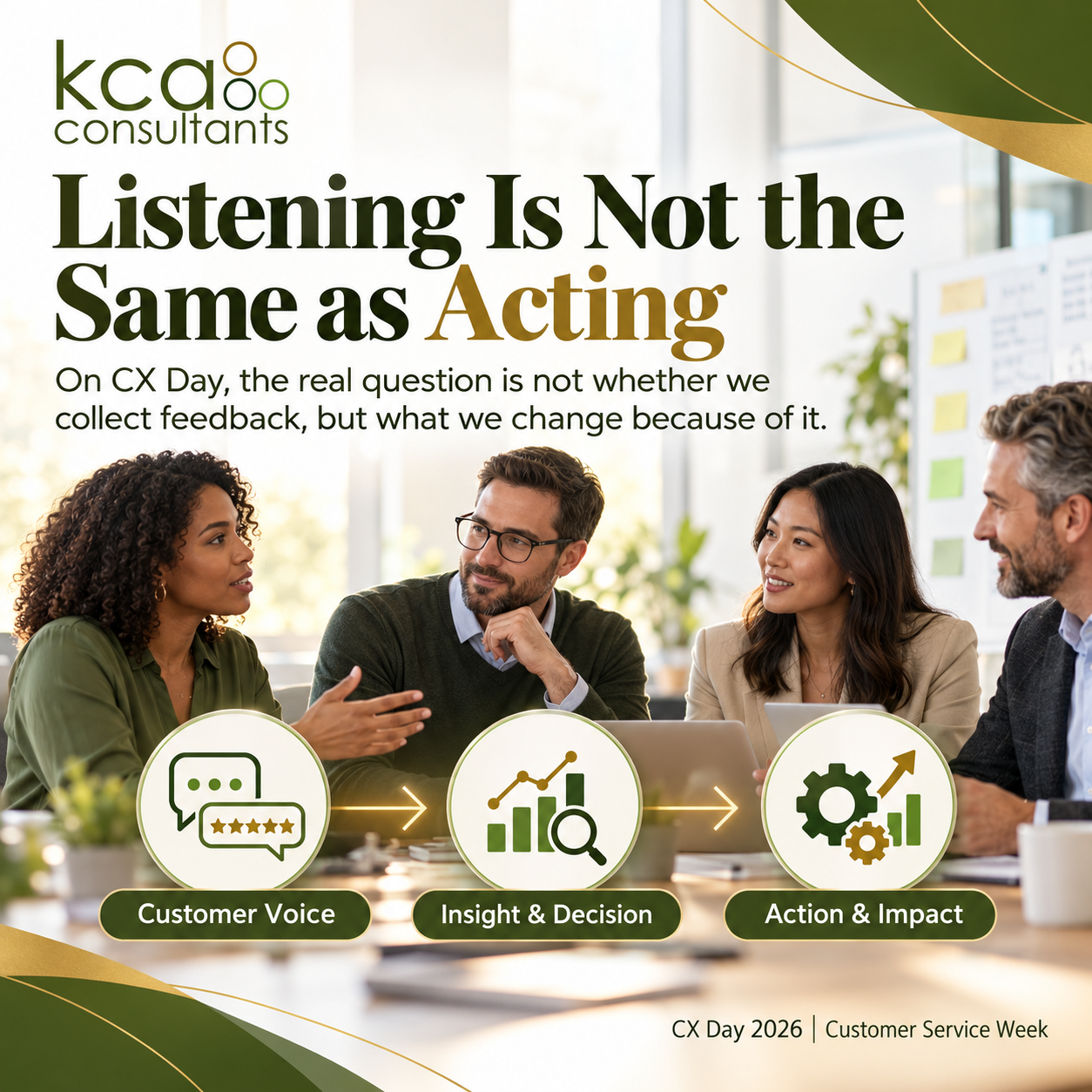
The value of a Voice of Customer program is determined less by how much information an organization collects and more by what happens after that information becomes available.
Who owns the issue? Who investigates the root cause? Who has the authority to change the process? Who decides whether an improvement receives resources? And who checks later whether the change actually improved the customer experience?
These questions become particularly important when customer problems cross organizational boundaries, as they frequently do.
A customer may tell an organization that they were required to provide the same information several times. Customer Service records the complaint. A survey records lower satisfaction. Operations owns one part of the process, IT owns another, Policy may own the requirement, and perhaps an external provider manages one of the channels.
Each function may legitimately conclude that its own part of the process is operating as designed.
The customer, however, is still providing the same information several times.
The organization listened. It measured. It reported. But did it actually improve anything?
That distinction is important because Customer Experience is rarely improved by measurement alone. Improvement requires ownership, governance, decision-making, resources, and follow-through.
When Listening Becomes Feedback Theater
There is another risk that receives less attention. Repeatedly asking customers for feedback without visibly acting on it can actually add to a poor experience.
When an organization says, “Your feedback matters to us,” it creates an expectation that the feedback will matter. If customers encounter the same problem repeatedly and are repeatedly asked to explain it again, the organization is effectively adding another task to an experience that was already frustrating.
The customer has spent effort dealing with the original problem and is then asked to spend additional effort describing it.
At some point, this risks becoming feedback theater: extensive listening activity, sophisticated surveys and impressive dashboards, but limited organizational change.
This does not mean organizations should stop measuring customer sentiment. It means measurement needs to be connected to a mechanism that converts insight into action.
From Customer Feedback to Management Intelligence
A mature Voice of Customer program therefore needs to connect customer feedback with what the organization already knows about itself.
That means bringing together the Voice of the Customer, the Voice of the Employee, and the Voice of the Process.
Where are employees repeatedly creating workarounds? Which issues are frontline teams apologizing for again and again? Where do actual processing times differ from what customers were promised? Which handoffs repeatedly create delays? Which internal KPIs appear healthy while the end-to-end experience remains poor?
These perspectives provide different views of the same underlying system.
Customer feedback tells us what people are experiencing. Employees often understand where and why problems occur. Process and operational data help determine what is actually happening inside the organization.
When these perspectives are connected, customer feedback becomes considerably more valuable. It stops being primarily a measurement exercise and starts becoming management intelligence.
The organization can then move from asking, “What score did we receive?” to asking, “What does this tell us about what needs to change?”
The Better Question
Perhaps one of the more useful questions organizations can ask is therefore not simply:
“How well are we listening to our customers?”
but rather:
“What have we actually changed because we listened?”
If that question is difficult to answer, the organization may not need another survey. It may need clearer ownership, stronger governance, better integration of customer and operational insight, and a more effective mechanism for turning feedback into improvement.
Because customers do not experience our dashboards.
They experience what we do differently because of what they told us.
This article forms part of KCA Consultants’ Customer Service Week and CX Day 2026 series exploring how organizations can move from individual service and CX initiatives toward more integrated Customer Experience Management.